

As a kid, in the backseat of the car, I used to close my eyes and count while my father or mother filled the gas tank. The automobile, childhood’s miracle on wheels, turns out to have an anxious limit, a red line on a gauge. But then comes the reassuring smell of gasoline, the opening and closing of the driver door. The tank is full, life goes on, the road is open.
Blink; I am safe.
A pair of gas stations lurked at the crossroads of my hometown, summoning exhaust to old stone buildings. By the time I learned to drive, I already knew where I could fill up. The fear of running out of fuel competed with the teenage desire to be free, to not think of anything, to just go. To drive the country roads, open the windows, feel the air.
I took in the gas stations on the commute to my jobs, on midwestern drives, and then on longer hauls to and from the Atlantic coast. In those days before GPS, I had maps in the glove compartment of my pickup; a few x’s marked where I could gas up, reminders that I didn’t really need, because the rhythm of the drive established itself as second nature.
As an American from a part of the country where people drive a lot, I developed an intuition for where gas stations must be, a sense of the interval on the highway that would be too long, of the hill over which there must be an exit and place to fill the tank. After I moved to Canada, I no longer had that feel for the highway; I had to keep my eye out for more discreet signs. This was a little disquieting.
How would we feel if there were no gas stations at all? These little patterns of worry and resolution -- empty tank, full tank -- make up daily life, and daily life can be taken for granted. But what if an empty gas tank were a real danger?
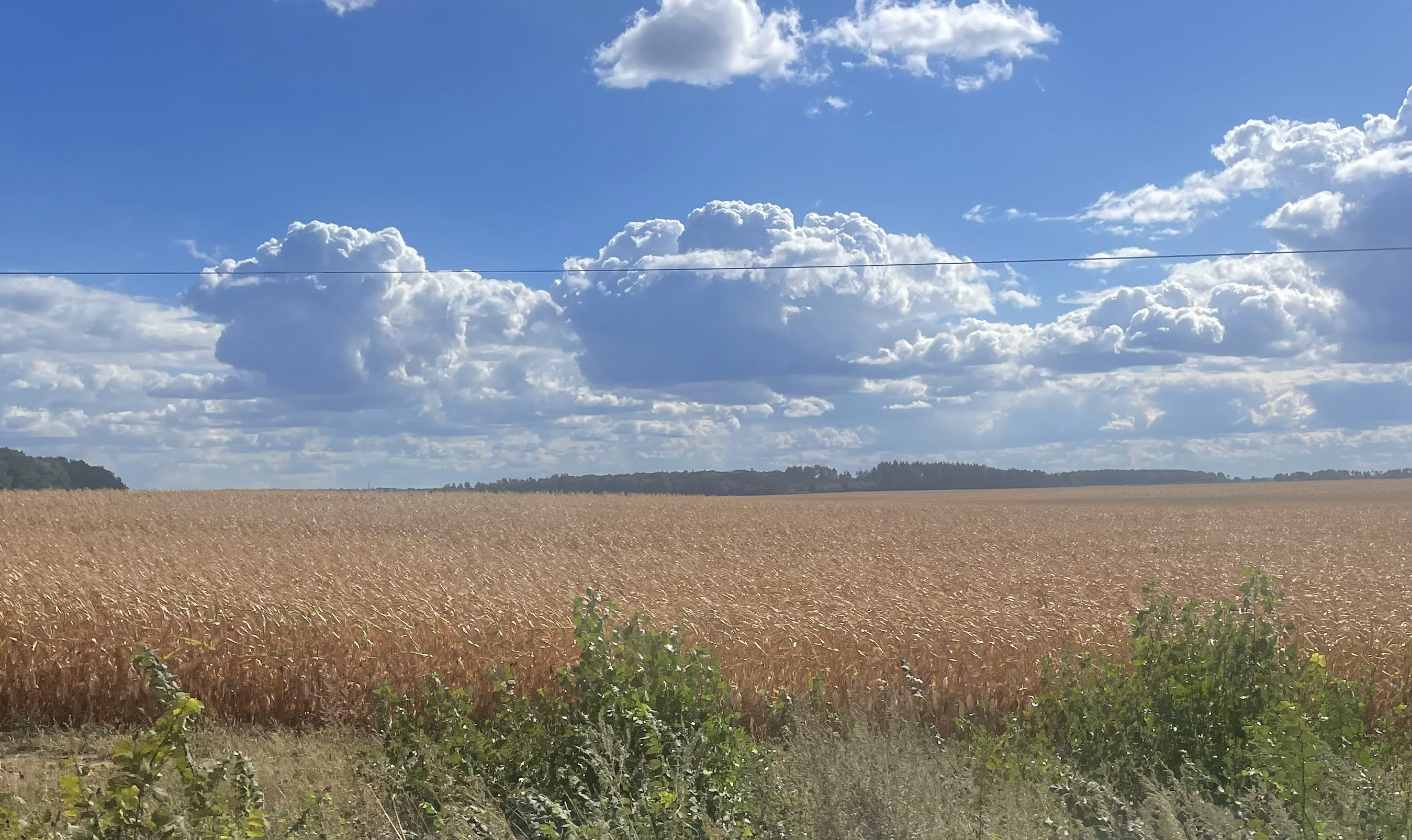
Last week I drove east with Ukrainian friends from Kyiv to Kharkiv. From a certain point, from Poltava eastwards, there was no place to get gas, because all of the stations had been destroyed by distant Russian drone operators. The Russians send drones at the pumps, causing explosions, killing attendants and customers.
A fireball in the past is one that you have to imagine in the future. Attacks on gas stations alter daily lives, adding that one more thing to think about. With each such new challenge, you have to plan a little more if you want to do the things that you find normal, to keep up the life you are trying to lead.
And no matter how well you plan, and no matter where you are, even if you are far from the front, everything can still go wrong, and you can die trying to get gas. After a few days in Kharkiv I returned to Kyiv. The Russians hit a gas station inside the capital city. I heard the explosion and could see the smoke. I drank some coffee and went for a run.
I know, I know. Life would be better if we had no gas stations at all. In the half century between the drives of my childhood and the Ukrainian journeys I am making now, we could have freed ourselves from oil. We could have had a world without 9/11, without American wars in the Middle East, and without the Russian invasion of Ukraine. Were we not dependent on hydrocarbons, Putin’s regime could never have arisen, and this war could never have started. In that better world, there would be no gas stations, and there would also be no drones coming down from the sky.
But we are not in that world; we are in this world, the one with gas stations marking space and time, and one where Ukrainians, like people around the world, need their cars to pick up young children, to see aging parents, to plot their lives.
There are parts of Kyiv where you can deal with all of your daily needs on foot, like the Lukianivka neighborhood. It has an outdoor market next to a big glass-and-steel shopping mall. But the Russians keep firing drones and ballistic missiles at Lukianivka. Walking is good for you, but it won’t save you from a rocket.
The Russians hit the outdoor market. They hit the shopping mall. I tried to notice it all walking through. Shops. Clinics. A pharmacy. A cinema. The Ukrainians, it should be said, keep going about their business. The mall is hollowness and rubble but the nearby McDonald’s is open. (Back in Kharkiv, the frontline soldiers are annoyed by this, since the one in their city is still closed.) You can buy flowers or fruit at the outdoor market if you want; it’s back.
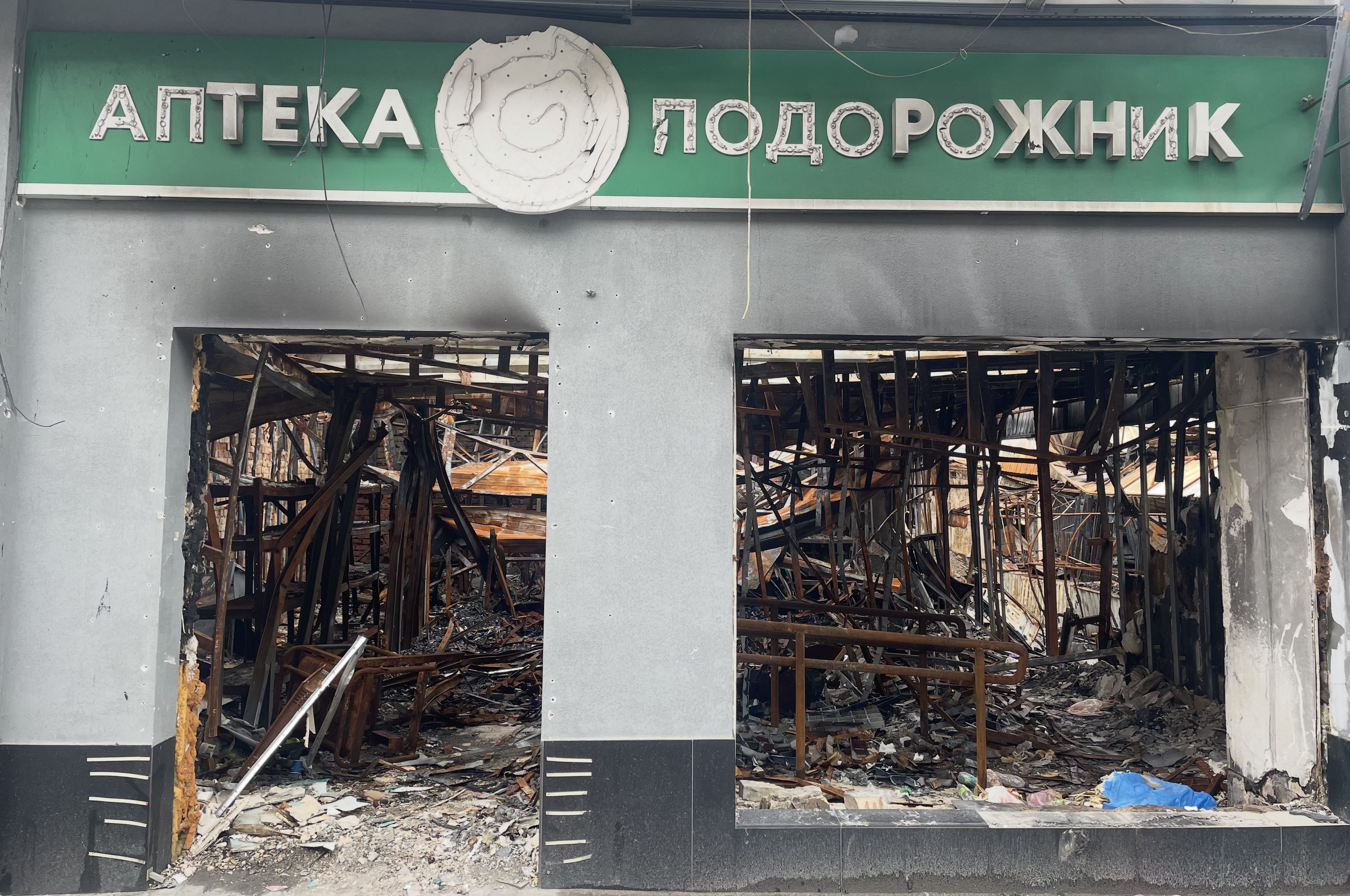
But you do so knowing that there will another drone, that there will be another missile.
And people can only afford to buy things when they can work. The Russians are also hitting the businesses, the factories, the mines, seeking to take away not only the rhythm of daily life but the basis of people’s livelihood. They are hitting the power stations and the utilities and the rail lines and the locomotives.
This has become a total war on the Ukrainian people. Every element of such a war is criminal. Every single strike on every single gas station, and all the rest. The kidnapping of children and the murder of activists in occupied zones. The torture of prisoners of war. The invasion itself.
You can’t walk away from the missiles. You can’t, all by yourself, make a life where you don’t need to gas up your car. We come into a world that is already mapped with little miseries and moments of relief, the empty tank and the gas station; we take it all in to our nervous systems. And those who make war on us not only kill us but seek to take our lives apart, to summon the anxieties into every second, to make daily life unbearable, to fill it with grief.
Russia’s full-scale invasion of Ukraine has been going on for longer than the First World War, and many of the soldiers are in trenches or tunnels. Ukrainian soldiers near Kharkiv just won their first major engagement fought entirely underground. It has been going on for longer than the Second World War, at least as the Russians count it, ignoring the two years when the USSR was allied with Nazi Germany. The Russian aggressor uses the fascist language of that war, in which Ukraine was also the major prize for both sides. Drawing support from real and aspiring dictators around the globe, Russia’s invasion resembles a Third World War. It’s just that the Ukrainians are fighting it all alone.
We are connected to this war, and to the degradation of life, and to the killing of civilians, all of which is worse now. The actions of the American government have visibly worsened the daily nightmare. The US president keeps oil prices high with his otherwise senseless war in Iran, and thereby gives Putin the money he needs to pay his soldiers -- and to build his projectiles and drones, which are full of American technology. We refuse to give Ukraine the interceptors it needs to stop the missiles. Many Americans are helping as individuals and as civil society, but as a government we give Ukraine essentially nothing.
Do we see this world war? As a daily experience, as a risk to life, as a contest between oligarchy and humanity, in which our own actions matter to tens of millions of people?
Maybe seeing can start with your next trip to the gas station. When your hand is on the nozzle, close your eyes, just for a moment. Imagine a slab of concrete with a hole in the middle. Everything familiar, reassuring, useful, is darkened, smoking, gone. Only the sign with the prices by the side of the road is still upright.
Blink; you are safe.
Kyiv-Chełm train, 16-17 September 2026
This is the first of two essays written at the same time on the theme of “Meditations on Stations”; the second will run tomorrow.
I have commented before that if you find yourself thinking, "That's really bad what's happening to those people but I'm OK, so far", you already live under an authoritarian regime. This piece just made it global.
With so much chaos in the news every day, reporting on the brave people of Ukraine has been in the background. Thank you for reporting the truth amid the chaos. Americans have been shielded for a long time. Everyone needs to pay attention.